There’s plenty that goes into creating an online store on Shopify for your home décor brand. Naturally, the design is the part everyone’s most excited about. But it’s typically the less glamorous groundwork that helps everything come together in a well-organized, thoughtful fashion.
Having designed and built a handful of Shopify sites for home décor shops, from the simple to the complex, I’ve gathered a list of best practices I guide my clients through. I’m sharing them with you today to help make the process clearer and to share the lessons I’ve learned along the way.
Determine your website goals and preferences
Grab a pen and paper, and settle in as you prepare to get clear on what you need and want your website to do.
Do you need a space that speaks to your brand’s story, so customers can connect with the people and purpose behind your products? What about reviews? Do you plan to offer interior design services alongside your products? How about a blog and/or newsletter to share more of your style and expertise?
And don’t overlook the practical side. How many products should your catalog hold (keeping in mind future growth)? How do you want customers to pay, and which payment processor(s) will support those options?
Figure out what will serve your ideal customer best, but also you and your brand. Then take the time to document it. Gathering this information upfront allows us to make a smart Shopify theme decision that’ll support your needs, both short term and long term.
Outline your home décor product library, collections & navigation
Structure comes next. Begin by listing out every product you’ll be offering, including gift cards. Seeing them all in one place makes the natural groupings easier to spot. Maybe it’s by room, product type, scent, or material. From there, organize those products into clear, easy-to-shop collections.
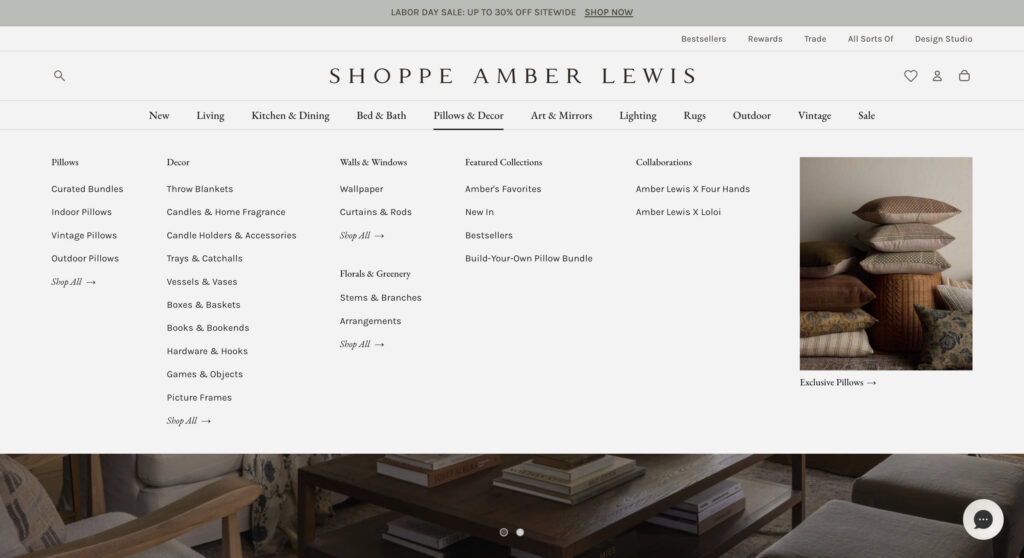
In my experience, the “mega menu”—the expanded dropdown that appears when you hover over or tap a main navigation item—is one of the most important elements to get right. You want it to be thoughtfully arranged yet contained so it doesn’t overtake a visitor’s entire screen. That way, the shopping experience remains clear, calm, and easy to move through.
A few brands that handle this beautifully include: McGee and Co., Shoppe Amber Lewis, and Last Candle Co.
Gather inspiration & do a thorough assessment
With your structure mapped out, now comes the fun part: gathering inspiration. Collect a small sample of the online stores you feel inspired by and find easy and enjoyable to shop.
Spend time making specific notes about what exactly it is you like about them. What got your attention? What would you like to make your own? How might you make it better for your store?
Pay close attention to the features at work here, too. Do they include a sticky header bar? Video? Image sliders? Lookbooks? Shoppable image hotspots?
The idea isn’t to imitate, but to notice the patterns and details worth carrying into your own Shopify build. And if you’re working with a Shopify designer, these notes will be beyond valuable to the collaboration. They’ll have a better understanding of your tastes, priorities, and the kind of shopping experience you’re wanting to create, so they can point you toward a theme that’s the perfect fit—one that already includes ~90% of your desired features.
That matters because Shopify themes require outside code in order to be modified. So starting close to your vision can reduce your costs down the line, whether that’s in hiring a developer or paying monthly fees for plugins.
Invest in product photography
If you take my advice on one thing, I hope it’s this: don’t wait until your website build is underway to get this done. Photography is one of the few things that can hold up your launch. Giving yourself a long enough runway means your photos will be ready and waiting when you need them, which is the most ideal scenario.
Rather than a box to check, treat it like it’s one of the most important parts of the branding process, because it is. If you don’t have a brick-and-mortar location, your photos are the closest a customer will get to your product before it arrives on their doorstep.
Now, think through where your imagery will come from. Generally, there are two paths. One is to generate your own product photography, either by investing in a photographer or setting up a lightbox and shooting on your own. This gives you complete control over a cohesive, on-brand look. The other path applies if you’re selling products from another supplier. In that case, you’ll want to have a conversation with them about image rights. Do you have their permission and the proper licenses to use their product photography, plus access to download all the image files you’ll need?
Either way, the upfront cost of this step can give a little sticker shock. But you’re paying for the long-term impact. High-quality imagery gives you a gallery you can use across platforms (from your website to your socials) and attracts more customers who can easily appreciate and trust your shop from the first interaction.
Write detailed product descriptions
This isn’t just about telling a customer what they’re buying. It’s about telling them why this product specifically. Use product names with keywords people will search for instead of a creatively vague title. If you want to add a little flair, you can keep charming names and descriptions for secondary titles.
Then, in the product description, combine sensory details with practical information, such as the dimensions or ingredients, care details, price and/or style variants, and shipping and return information. Also, be sure the Add to Cart button is noticeable and accessible. What about featuring recommended or related products to encourage larger orders? As you’re writing, challenge yourself to craft non-generic descriptions to show off your brand’s personality. That extra effort will make your store feel trustworthy and distinct.
And once the drafts are complete, read them a few times over. Maybe even one time outloud. Ask yourself, “Would this convince me to buy?” If not, keep refining until it’s a yes.
Craft copy for your core pages
With the bulk of the heavy work out of the way, now it’s time to write the words for your core pages. Often, this means your Home, About/Our Story, FAQs, Policies, and Contact pages.
Think of these pages as a space to lean into your brand voice. If you want to learn more about copywriting strategies, I’ve put together a post for you with the help of my creative partner and friend Carrie at Woven Copy.
Optimize for search
Before you hit Publish on your site, dedicate some time to the SEO basics. If you’re not familiar with what this entails, this post is a great place to start.
Ultimately, you’ll want to confirm your Shopify site’s page titles, meta descriptions, image alt text, favicon, social sharing image, domain, and redirects (if applicable) are all filled out with on-brand information.
Complete a test purchase
To make sure everything is functioning properly, run a test transaction from start to finish. Add to cart, apply a discount code, check out, and confirm the order confirmation email makes its way to your inbox and looks and reads the way you want it to.
This is also a great moment to double-check your shipping rates, confirm your payment methods process correctly, and make sure your taxes calculate as expected. While unexpected issues happen, it’s better to catch a hiccup yourself.
Helpful Shopify links and resources
Here are a few worth mentioning:
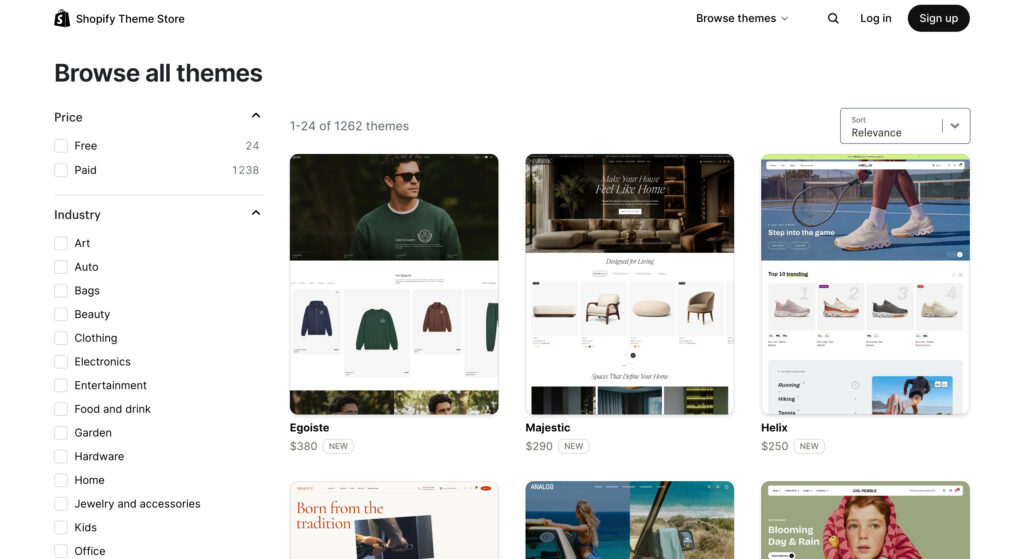
- Shopify theme store: Explore free and paid themes, filtered by the features and catalog size your brand needs. I recommend you select a theme directly from the Shopify store for support and access to any Shopify developers.
- Product media types and requirements: Get official specs for the images and videos to upload and display in your online store.
- Shopify SEO guide: Read through an extensive checklist covering setup, keywords, and on-page optimization for your online store.
- Shipping tax: Learn how to properly set up shipping taxes. As this is for informational purposes only, you’ll want to be sure to consult a professional for location-specific tax advice.
If you’re looking for more, be sure to visit the Shopify Help Center.
Shopify sites by Duelle Made
If it helps to see how these pieces come together in a real online store, here are a few Shopify builds I’ve been invited to partner on:
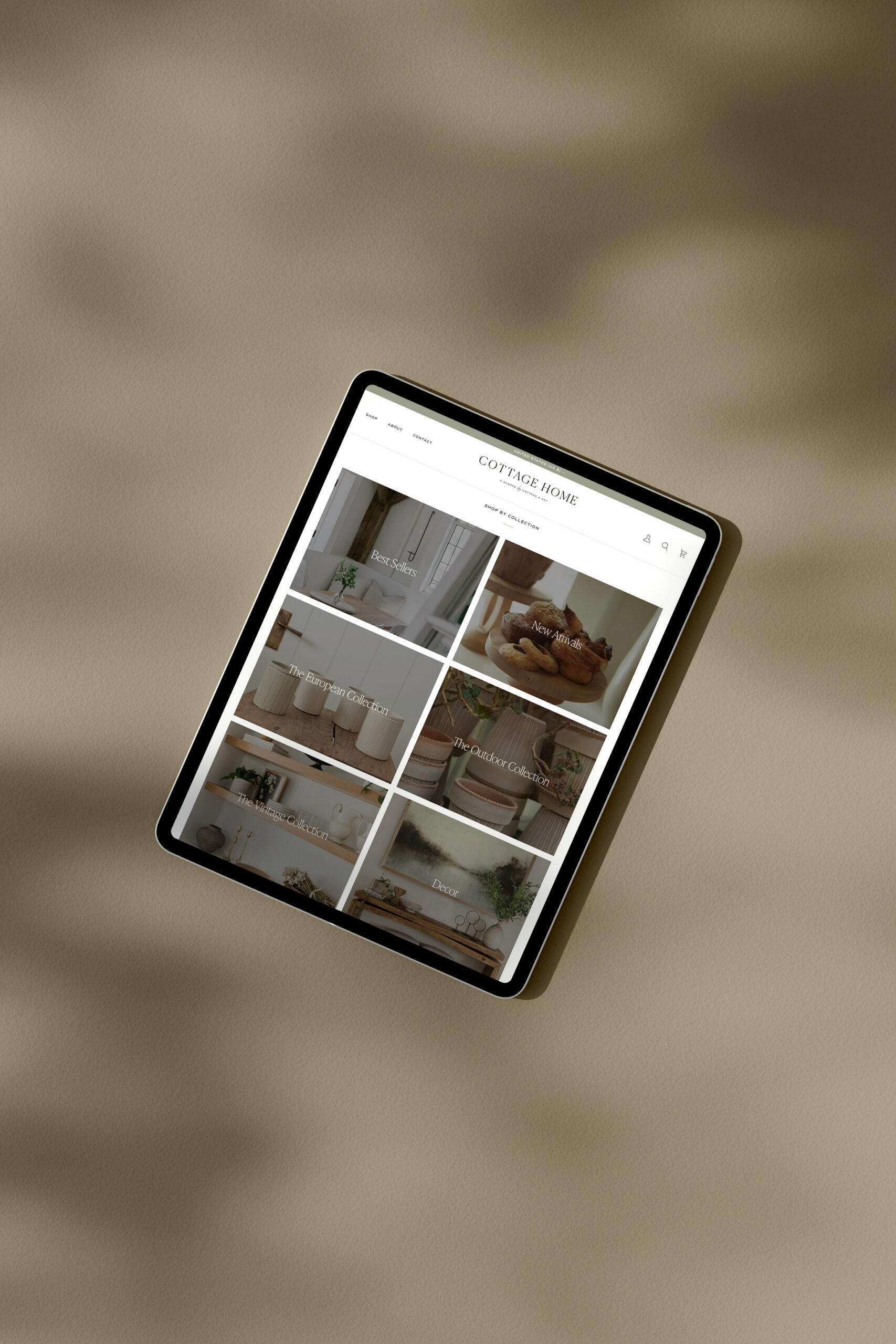
Cottage Home: A curated homeware shoppe by Austin-based Cottage & Key, whose growing product library called for a mega menu, seasonal homepage features, and cohesive photography that inspires the “Shop the Look” styling moments.
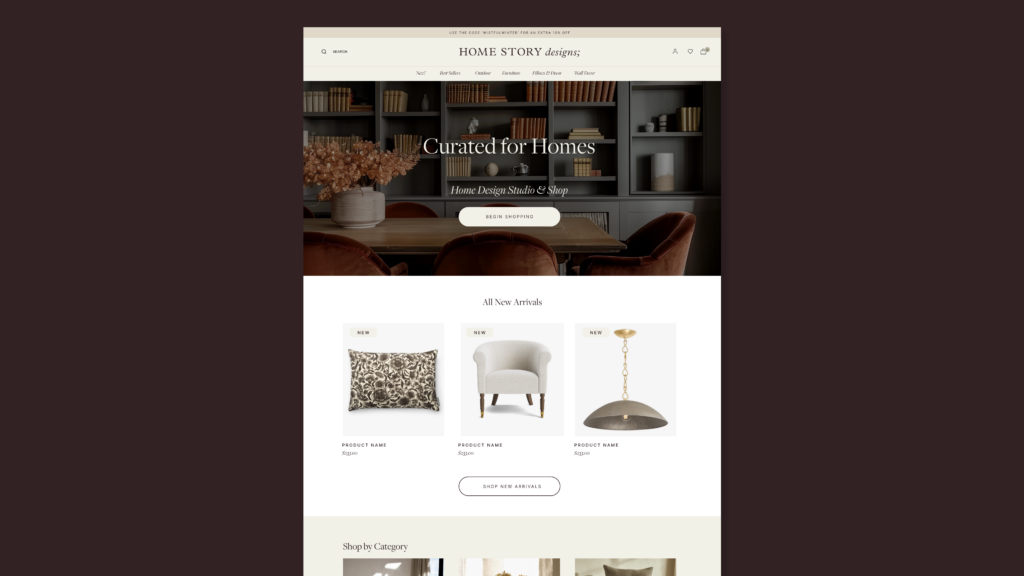
Home Story Designs: A considered home décor brand where clean navigation and consistent, licensed product imagery come together for a shopping experience that feels both polished and trustworthy.
Studio V. Forme: A scent-led brand with collections organized by category and signature fragrance, sensory-rich product descriptions, and trust-building touches like reviews, a journal, and clear FAQs.
Whether your online shop has yet to launch or already exists but feels unfinished, this list of best practices will help everything come together for your home décor brand.
And if, somewhere along the way, you’d prefer a trusted partner to create an on-brand Shopify site that’s ready for sales? I’d be glad to support you. Inquire today to start the conversation.