So you’ve decided to go the website template route for your interiors brand. Maybe that decision was made with the help of reading this post?
Either way, when you start doing your research and come across a template shop online, it’s easy to empathize with how your clients feel staring at 20+ fabric swatches, trying to make an impossible choice.
Decision overload is real. And with website templates, it hits home—especially when you have a very visual eye and a very specific sense of what you want, but aren’t entirely sure how to translate that into a website.
Once you know what to look for—and what to look past—the right website template for your brand becomes much easier to pick. Let’s walk through it.
First, What Website Platform Fits Your Brand?
Before you even start browsing templates, it helps to know which platform you’re shopping for—because that decision shapes everything else. Two platforms consistently deliver for interior designers and homeware founders:
Showit is a design-forward platform built for service-based businesses. If you’re an interior designer whose primary goal is to attract and convert clients, Showit gives you the creative freedom to build something that serves your brand well long term.
Shopify is the preferred pick for product-based businesses. If you’re a homeware founder selling a curated collection online—or an interior designer with a retail arm—Shopify’s theme ecosystem supports that experience, from product pages to checkout.
An important note: some businesses need (and prefer) both platforms. You might run your studio presence on Showit and your shop on Shopify. It’s more common than you’d think, and it’s a decision I’ve helped clients navigate (see here and here).
Where to Find the Best Website Templates for Showit and Shopify?
There’s a growing collection of template shops out there, which is amazing, but it also adds to the overwhelm. With so many options to sort through, it’s not a decision you should have to make alone. For Showit sites, I consistently lean on these two:
Both TONIC and Northfolk are top-tier. Yes, you’ll pay more than you would for a $200-$400 new-to-the-market option. But there’s a good reason for that. They’re incredibly organized on the backend and designed to support your search engine optimization efforts. You also get everything you need to scale your website (and then some). Any page you can think of living on your interior design website, you’ll have access to it.
For Shopify themes, purchasing one directly from the Theme Store will result in a cleaner, easier to customize, scalable experience than a budget-friendly option that cuts corners.
What to Actually Look for in a Website Template
Before you start considering a template, it helps to know what to look for. Here’s the framework I use with every website template customization client:
Is it built for a visual brand?
Interior designers and homeware founders live and breathe visuals. Your work needs space to exist—large image and video areas, portfolio layouts built around the photography, and a design that doesn’t compete with your content.
How’s the font and image treatment?
Building off the first question, consider the placement and orientation of images across the primary pages. Do the proportions feel right for the kind of work you do and your existing collection of photography?
Pay attention to where things live on the page, and choose a visual layout with your goal in mind. If it’s a classic grid, you’re signaling a more stable, calm, consistent web presence. An asymmetrical grid signals something more modern and unexpected, but also creative.
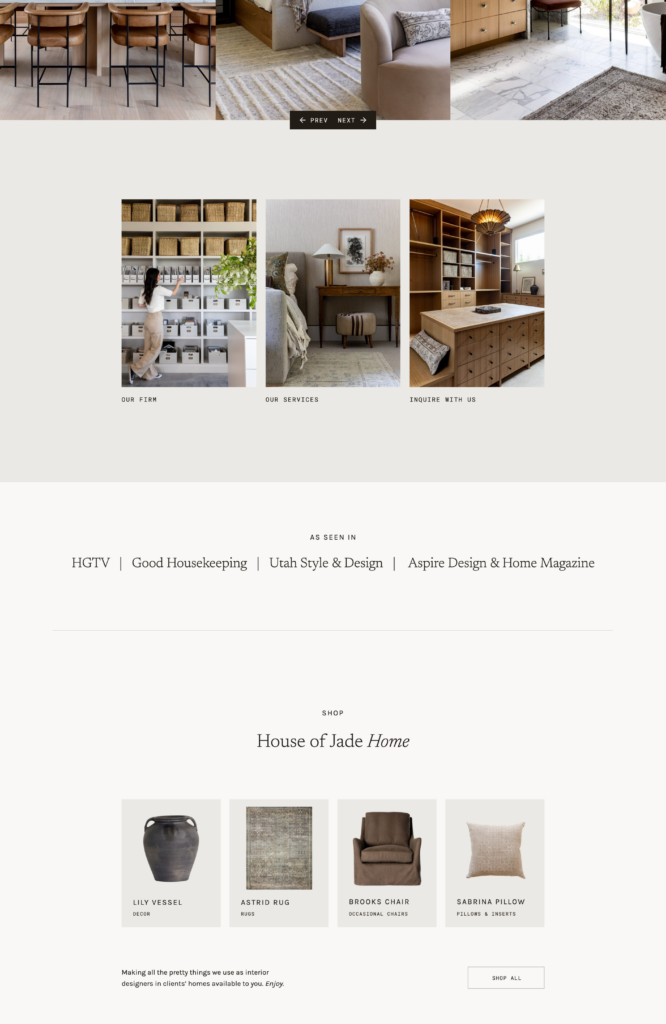
Timeless, Calm, Approachable
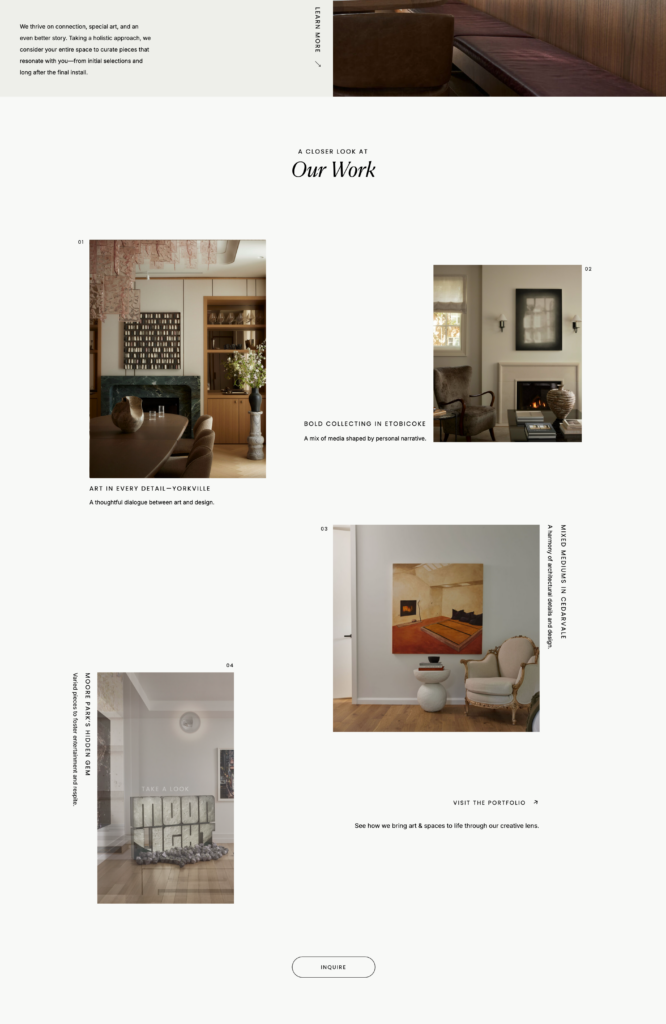
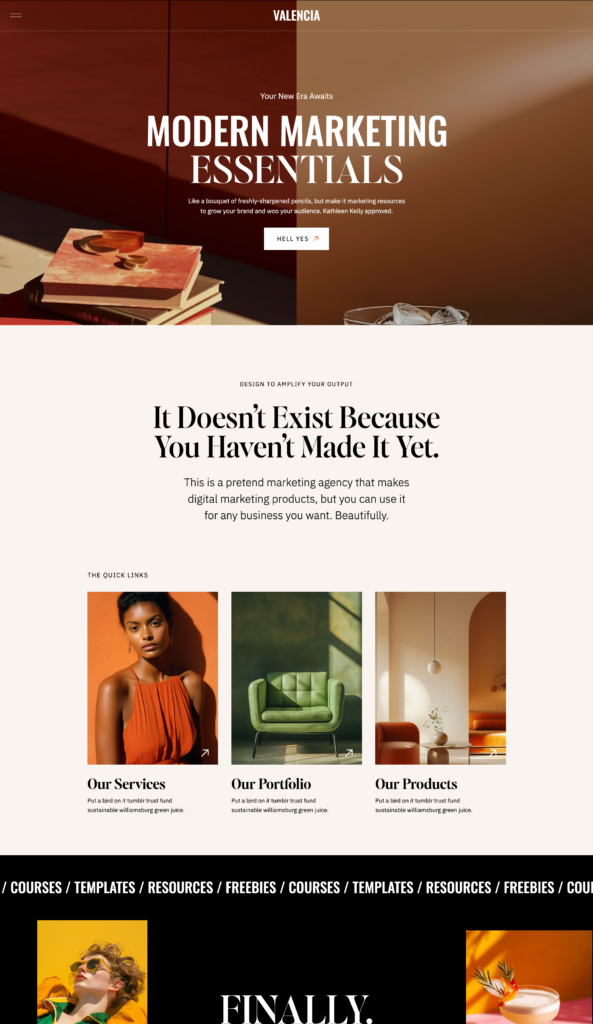
Contemporary, Innovative, Approachable
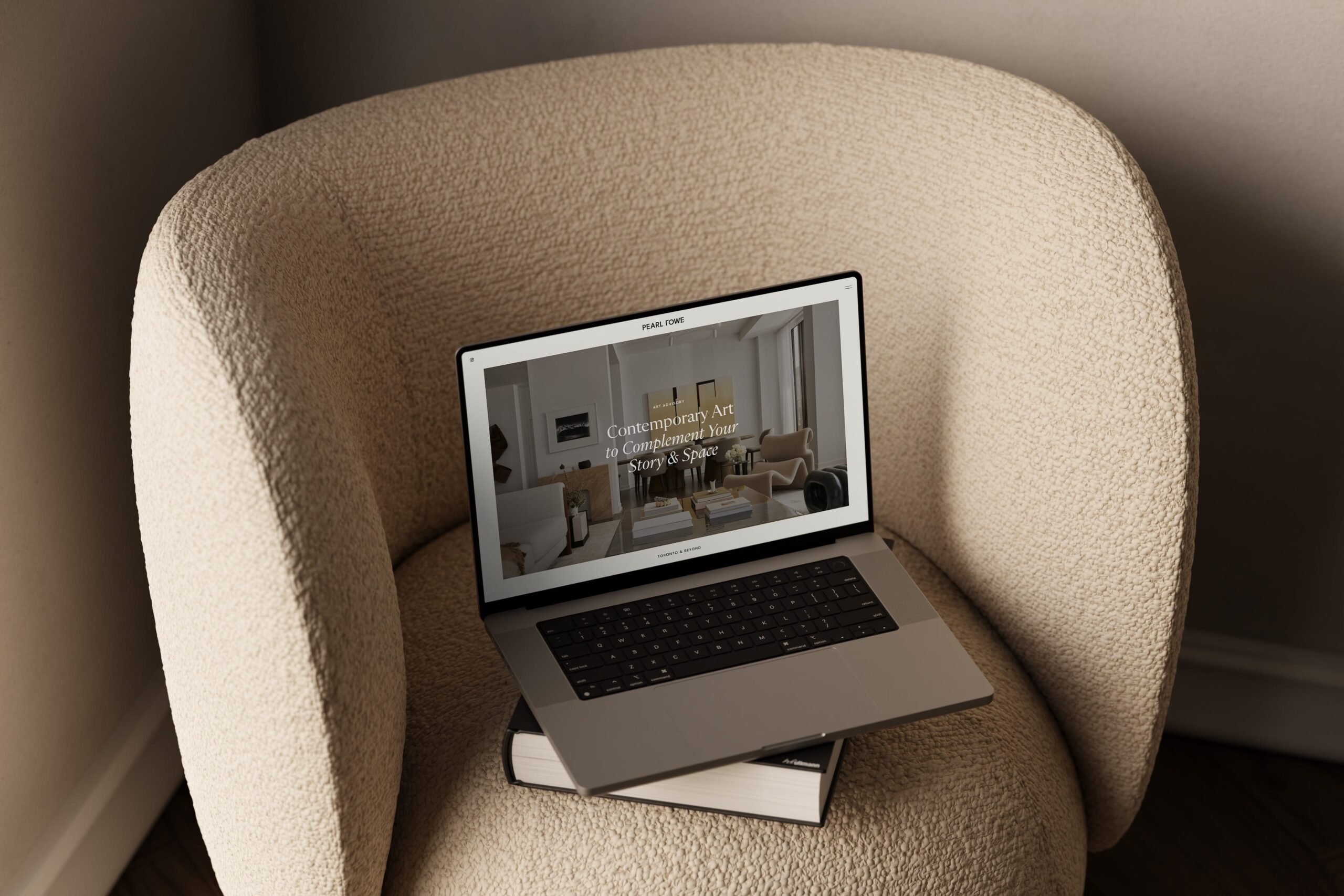
On the font side, while you can look past the typography used in a template demo, do pay attention to headline placement and overall structure. How are content blocks arranged? Where are call to action buttons positioned, and do they feel like a natural next step? Also worth noting: animations and hover states. While these can often be adjusted, premium templates tend to have more of them built in, which can create movement and make for a more engaging user experience. Templates like TONIC’s Fitzgerald and Valencia, and Saffron Avenue’s The Swan are good examples of this in action.
Does it leave room for website copy?
This is one thing many visual-minded founders overlook. When you’re drawn to almost entirely image-based templates, it usually means you’re modeling what you see from the designers you admire most. But it works for them because their name has been built up across press, social, referrals, and years of showing up. The site can play a quieter role because the reputation precedes it.
When you’re earlier in that journey, your site has more ground to cover. And that’s where strategic website copy comes in. It gives your ideal clients context, builds trust in your vision and expertise, and supports your visibility behind the scenes.
The best templates for interior designers balance both imagery and copy—giving your photography the space it deserves while creating natural, strategic places for purposeful copy to live. That doesn’t mean you must overload your website with words. A good rule of thumb here is to aim for at least 300 words on your key pages. Working with a copywriter on this means you’re not just getting words—you’re getting someone who knows how to fit the right message into the right structure, without the back and forth of figuring it out yourself.
Does the core structure support your business?
For interior designers, any template you’re considering should account for these pages at a minimum:
- Home—the first impression (and it’s about much more than a gallery of work)
- About—the place where your story establishes a connection with your ideal client
- Services—the overview of what you offer, how, and who it’s for
- Portfolio—the story of your style and capabilities (in both visual and written form)
- Press—the social proof that builds credibility and recognition
- Blog—the place where your POV and personality get more opportunities to show up in support of your content strategy and online visibility
- Contact—the page that turns interest into action
- Terms & Conditions—the legal info that protects your site (a must for any website)
- Site Credits—the acknowledgment to the creatives who supported you in creating your online home
For product-based clients on Shopify, the priorities shift slightly—from needing clear, easy-to-shop collection and individual product pages to a smooth checkout path, navigation that scales with your catalog, and dedicated brand-building space (like About and Contact pages, and room to display real customer reviews).
Of course, there’s room to grow and evolve within a website template—whether that’s on Showit or Shopify. But it’s worth making sure the structure suits your business.
On that note, premium website templates come fully loaded—every possible page, every layout variation, every optional section. Part of handing this work off to a creative team means you won’t have to wrestle with what stays and what goes. The end goal is a site that’s strategic, intentional, and built for your brand while creating the best experience for your readers.
Is there more going on beneath the surface?
From someone who’s had the pleasure of working on hundreds of websites, a template can look perfect in a demo and still be difficult to use. This could be the result of unclear instructions and support if you’re doing it yourself, or a lack of organization and structure from a website template customizer’s POV. So before you fall in love with the aesthetics, look at the reviews. See if and how other designers have made it their own. Ask if your brand/web designer has worked with it before and what their experience was like. You want to invest in a template that’s as organized and put-together on the inside as it is visually appealing on the outside.
How to Narrow Down Your Website Template Options
In working with interior designers every day, I understand how you approach decisions—with care, with intention, and sometimes with a level of consideration that makes it hard to choose.
That’s why I prefer to narrow down the options, curating 2-3 to choose from. At that point, the decision typically comes down to:
- Which layout feels most aligned with your brand?
- Which one best serves your audience and your content?
- Which one supports your brand goals?
Keep in mind that every template you’re browsing is dressed in someone else’s colours, photography, and branding. It can be disorienting to see past all of that—but that’s exactly the skill a brand and website designer brings to the table.
You’re not looking for “perfect” here. You’re looking for the one with the right bones for you. Because once your branding, copy, and photography are in place, it’ll feel entirely and exclusively yours.
What Happens After You Purchase Your Website Template?
For Showit, you’ll receive a confirmation email and your share key. For Shopify, you’ll upload the theme directly into your Theme Library.
In either case, what comes next depends on your comfort level with tech, branding assets, and your time. Customizing a template yourself is possible—but between client work and everything else that comes with running a business, it’s a project that has a way of lingering on longer than you’d like without the right support. Outsourcing to a designer who specializes in Showit and/or Shopify template customization means you hand over the assets so your website is thoughtfully and strategically tailored to your brand.
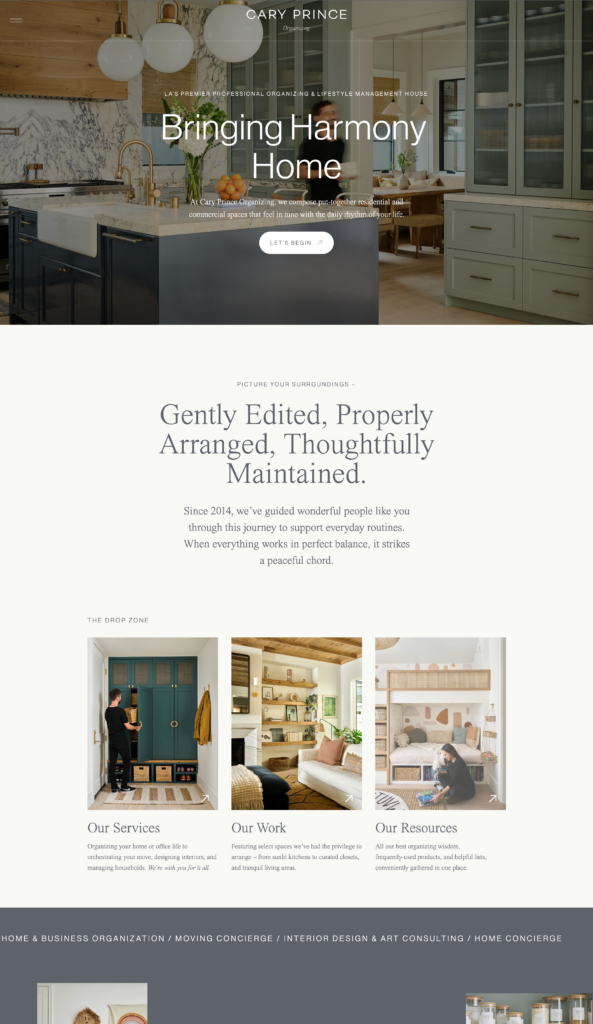
Ready to Customize A Website Template To Your Brand?
A great template is the starting point. In the right hands, it becomes a website that reflects the caliber of your work and what makes you different. I’d love to be part of building that for you. Explore brand design and website template customization services for interior design and homeware businesses.